
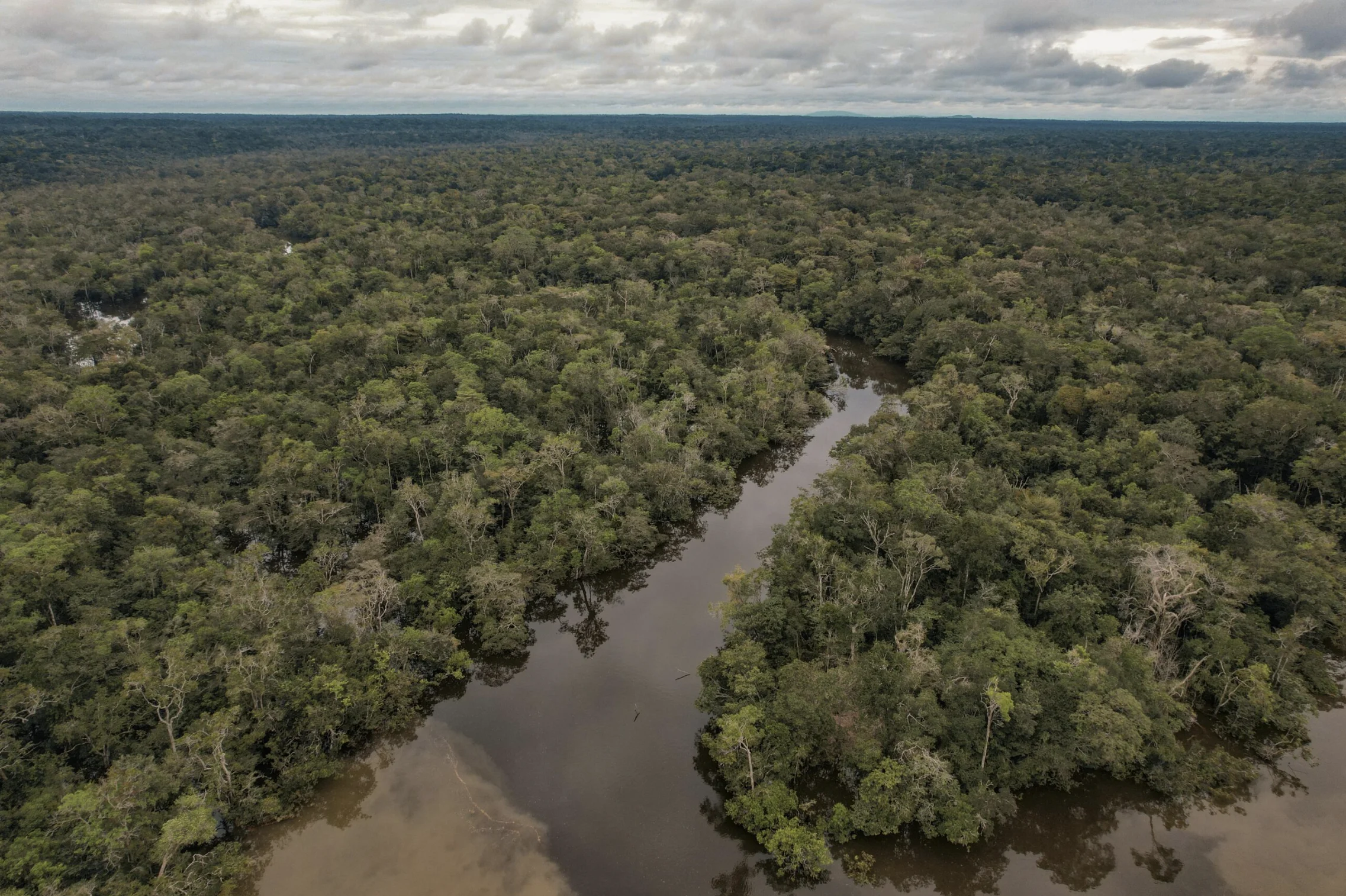
The Amazon rainforest is a natural ecosystem characterized by its vast expanse of tropical forest, home to the world’s greatest biodiversity of flora and fauna. This is made possible by the region’s abundant sunlight and heavy rainfall. This biome plays a crucial role in regulating the global climate and maintaining planetary stability.
The Amazon and its Ecosystem Services on a continental and global scale
The Amazon is often referred to as the “lungs of the Earth” these days, and with good reason, as the vast array of trees in the area can absorb carbon dioxide (CO2) from the atmosphere and release clean oxygen through photosynthesis.
However, this is not the only ecosystem service the Amazon provides on a continental scale. There are other remarkable natural phenomena that often go unnoticed. According to recent studies, the Amazon biome serves as a huge source of humidity or water vapor, which is necessary for rainfall in many regions of the Americas and even beyond. This phenomenon is known as “flying rivers”: vast flows of water in the form of clouds that travel, driven by winds, across the continental platform at high speeds through the atmosphere, eventually falling as precipitation and completing the hydrological cycle.
Threats to the Amazon Biome
The climate benefits provided by the Amazon rainforest are under constant threat due to various natural and human-caused factors across the nine countries it spans: Bolivia, Peru, Colombia, Venezuela, Brazil, French Guiana, Guyana, Ecuador, and Suriname.
The main drivers of deforestation and forest degradation include forest fires, the rapid expansion of agricultural and cattle ranching frontiers, legal and illegal mining, and drug trafficking. These actions disrupt natural balances, release large amounts of stored carbon from trees, and destroy critical habitats for countless species.
Opportunities of REDD+ Projects
REDD+ projects represent a key component in the fight against climate change by directly addressing one of the main sources of greenhouse gas emissions: deforestation and forest degradation. By conserving and sustainably managing forests, these projects not only help reduce carbon emissions, but also contribute to the preservation of biodiversity, the maintenance of vital ecosystem services, and the creation of sustainable economic opportunities for local communities. In addition, as part of international climate commitments, REDD+ projects play an essential role in building a more resilient and sustainable future. Protecting forests is fundamental to ensuring a stable and healthy climate for present and future generations.
By Juan Camilo Pita
Environmental Engineer, Human Forest.
Sources:
¿Por qué importa la Amazonía? WWF (2022). Available at: https://wwf.panda.org/es/dondetrabajamos/amazonia/importancia/
Destrucción del Amazonas: las principales amenazas para la mayor selva tropical del mundo en los 9 países que la comparten (2020). Available at: https://www.bbc.com/mundo/noticias-america-latina-51377234
Durigan, G., & Honda, E. A. (2024). Ecological restoration and water‐related ecosystem services, one step ahead: a reply to Dib et al. (2023). Restoration Ecology, 1. https://doi-org.ezproxy.umng.edu.co/10.1111/rec.14113