
In recent days, the district government has announced the implementation of water rationing measures in most areas of Bogotá and in neighboring municipalities such as Soacha, Funza, Madrid, Cota, Mosquera, La Calera, Chía, Cajicá, Sopó, Gachancipá, and Tocancipá.
This measure is due to the drop in water levels in the reservoirs that supply the city, which are part of the Chingaza system, consisting of the Chingaza, Chuza, and Neusa reservoirs. The decrease in water levels is directly linked to the El Niño phenomenon, which has been affecting the national territory since the beginning of the year. High temperatures and lack of rainfall are the main causes of this decline (Melo et al., 2017).
The district government has recommended several measures to help mitigate the situation, including checking faucets, showers, and pipes for leaks and turning off the tap while shaving or using shampoo. However, these actions are only effective when reservoir levels are already low. What can we do to mitigate the long-term effects of climate change?
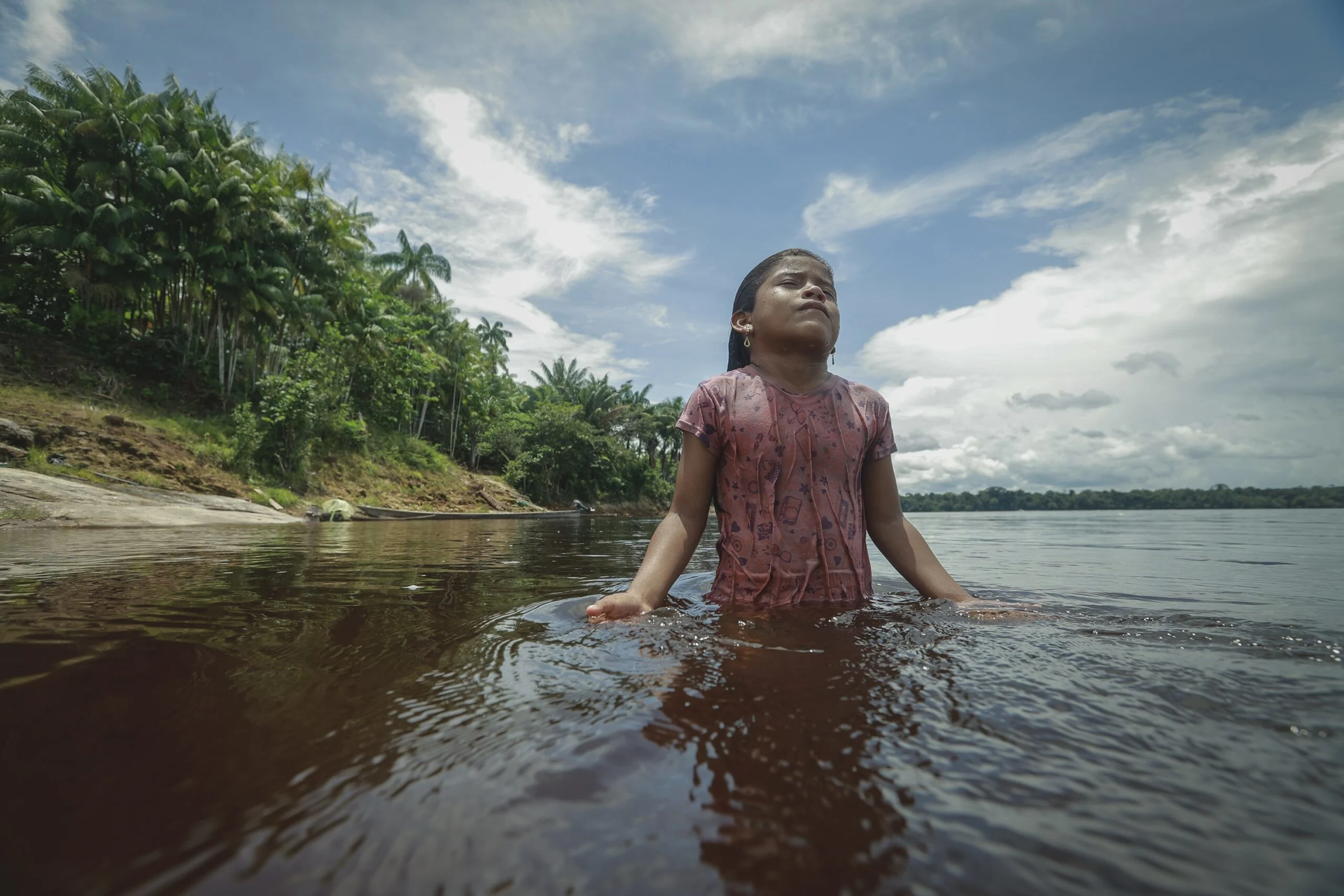
Climate change affects rainfall distribution, so mitigating its effects — such as reducing threats to ecosystems, like deforestation in the Amazon — is essential to ensuring an adequate supply of drinking water. But what is the connection between the Amazon and Bogotá’s water supply?
First, it’s important to note that rainfall in South America originates from large amounts of water vapour rising from the Atlantic Ocean and combining with moisture from the Amazon rainforest (Rojas, 2023). These flows can reach altitudes of up to 15 kilometres and travel from where the Atlantic and the Amazon meet towards the Andes mountain range. Upon reaching the mountains, the flows collide, cool down and condense, resulting in precipitation that spreads across the continent towards the south.
This is why the conservation of the Amazon is an issue that affects everyone—even those living in the remote regions of the Andes.
It is crucial to take action to reduce deforestation and forest degradation, in order to preserve the biodiversity tied to these ecosystems and retain carbon. These efforts are essential to address today’s challenges arising from rapid climate change, shifting consumption patterns and human behavior. Approaches like REDD+ can make a real difference in Amazonian forests and contribute meaningfully to the solution.
By Cindy Romero
Forestry Engineer, Human Forest
Bibliographic references
Melo, S., Riveros, L., Romero, G., Álvarez, A., Diaz, C., & Calderón, S. (2017). Efectos económicos de futuras sequías en Colombia: Estimación a partir del Fenómeno El Niño 2015. Archivos de Economía, 466, 1-34.
Rojas, R. S. A. (2023). Amazonía, Biodiversidad, Ríos Voladores y Seguridad Nacional. Revista de Ciencia e Investigación en Defensa, 4(2), 57-73.