
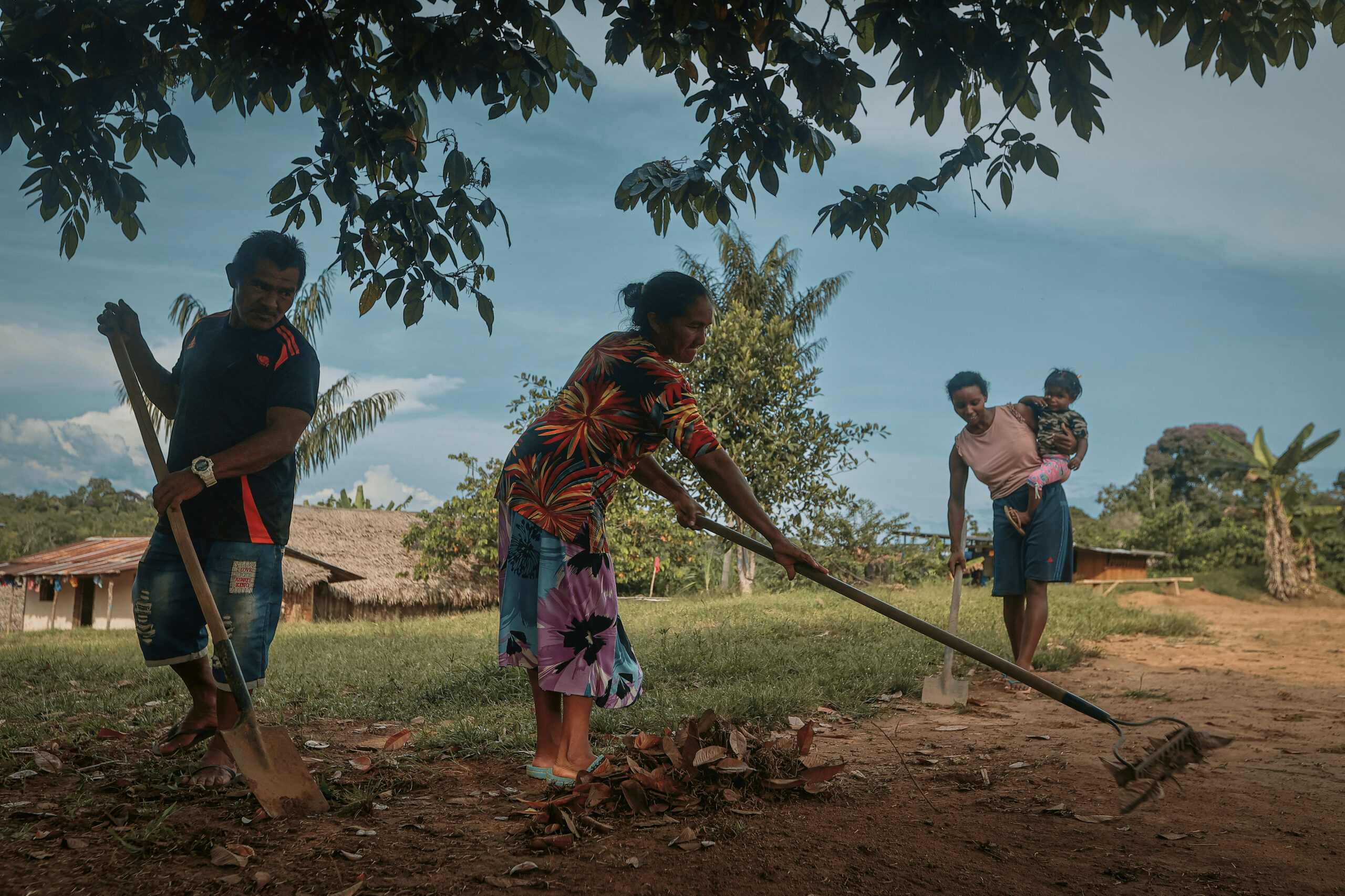
On the path toward a sustainable model, projects are not built solely on technical foundations, but on people. In the Grateful Planet project with the Bajo Río Guainía and Río Negro Indigenous Reserve, the so-called family commitments represent one of the most important pillars to ensure forest conservation, community well-being, and the long-term sustainability of REDD+ impacts.
But what exactly are these commitments, and why are they key to social transformation in the territory?
What are family commitments in our REDD+ project?
Family commitments are voluntary agreements undertaken by families within the territory, through which they engage in the project’s socio-environmental actions.
These activities are proposed by the communities themselves, based on their needs, priorities, and the values they seek to strengthen. They are not merely tasks, but rather a model of community governance, in which each household becomes a key actor in forest protection, the implementation of sustainable practices, and the strengthening of traditional knowledge and practices.
Their main objective is to enhance community participation by promoting collective decision-making, ensuring compliance with socio-environmental safeguards, and encouraging responsible habits that contribute to ecosystem conservation and the preservation of Indigenous traditions.
At their core, family commitments connect three fundamental dimensions of sustainable development: social, environmental, and forest-related.
1. Social commitments: community, leadership, and shared responsibility
Within the social component, family commitments are focused on strengthening the social fabric, local organization, and the transmission of ancestral knowledge to younger generations. The social commitments implemented in the project include:
- Teaching handicraft-making
- Teaching traditional medicine
- Teaching how to speak and/or write in Indigenous languages
- Community health facilitator
- Sports and recreation coordination
- Assisting the pastor in Sunday school
- Support to community leadership (captaincy)
- ICT (Information and Communication Technologies) coordination
- Maintenance coordination
These commitments encourage active family participation, strengthen community leadership, and foster shared responsibility in territorial management. They contribute to collective well-being, the preservation of cultural identity, and the organization of community activities and participatory spaces.
2. Environmental commitments: everyday practices that transform the territory
Environmental commitments translate sustainability into concrete, day-to-day actions within the community. These include:
- Community clean-up activities
- Composting
- Recycling and transformation of reusable waste
For example, families organize community cleaning schedules, establish ecological points for proper waste separation and disposal, and develop circular economy initiatives such as transforming waste into useful or reusable products.
These actions not only improve community health conditions but also reduce environmental impacts, prevent pollution, and strengthen a culture of care and respect for the environment.
At the same time, these processes promote environmental education within families, raising awareness about the importance of protecting natural resources—especially regarding proper waste management.
3. Forest commitments: conservation, restoration, and forest monitoring
The forest component is directly linked to the objectives of the REDD+ model: reducing deforestation and forest degradation. The forest commitments include:
- Tree planting
- REDD+ project education and awareness
- Forest monitoring
In this context, families take on key roles within the project, such as educating others about REDD+ within their communities, participating in community-based forest monitoring, identifying early warning signs of deforestation and changes in forest cover, as well as planting and caring for native trees in degraded areas and producing seedlings for ecosystem restoration.
Community monitoring also helps identify activities such as logging, mining, or natural disturbances, thereby strengthening territorial management and forest protection. This approach transforms communities into active guardians of their territory, integrating traditional knowledge with technical tools for forest conservation.
More than commitments: a sustainability model rooted in the territory
The family commitments of the Grateful Planet project with the Bajo Río Guainía and Río Negro Indigenous Reserve are not just a list of tasks—they are a comprehensive strategy that recognizes and strengthens Indigenous communities as protagonists of their own development.
Through this model:
- Biodiversity conservation is promoted
- Local governance processes are strengthened
- Real impacts are generated in emission reductions under the REDD+ framework
- A path toward sustainable development with cultural identity is built
In a global context where sustainability is a priority, initiatives like this demonstrate that the most effective solutions emerge from the territory itself, through the active participation of those who inhabit it.