
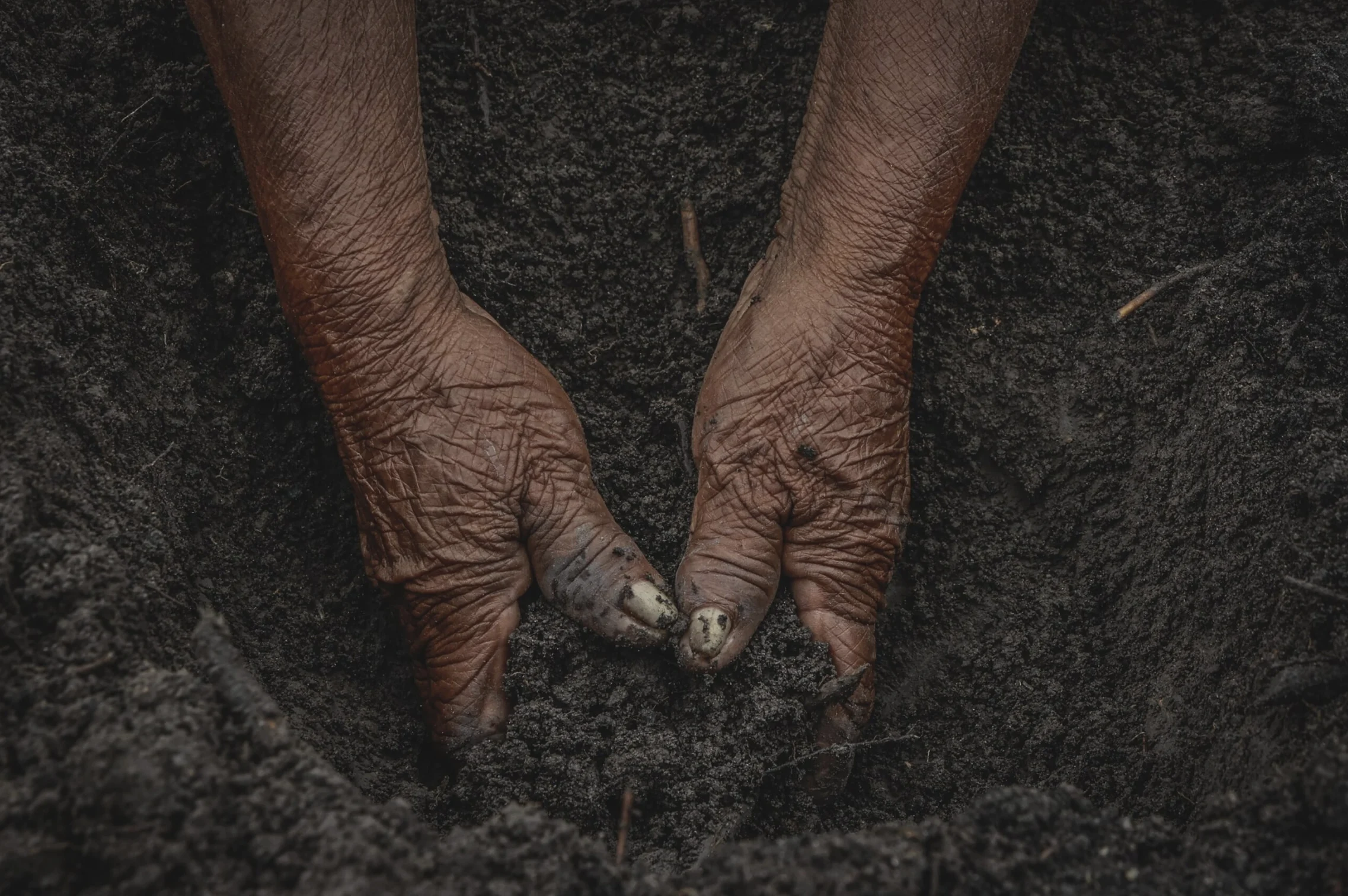
What does territory mean to Indigenous communities?
For Indigenous peoples, territory is a sacred space of unity and life—it is the foundation of their origin and the basis of their social and spiritual existence. Without it, the survival of the people themselves is not possible. For the Curripaco and Yeral ethnic groups, from the Bajo Río Guainía and Río Negro Reserve, each community is closely linked to a specific territory that was granted to them from the beginning by guardian owners (their ancestors). In this territory, a natural and cultural balance must be respected and restored when disrupted by individual or collective human intervention. Similarly, the Puinave and Curripaco peoples, who inhabit the Cuenca Media y Alta del Río Inírida Reserve, view territory as:“The place of work, where we live and where our dead are buried, where we find medicinal and food plants, where we fish, hunt, and gather wild fruits we call pepa. For all these reasons, our entire territory is sacred and must be maintained in balance. We must respect it because it represents life and the legacy of our ancestors who cared for it with their knowledge and lives for future generations. The CMARI reserve preserves our ancestral land because this land provides us with the products for our daily life and ensures a future for our children, grandchildren, and others.”In the worldview of the Ñamepaco people, settled along the Isana and Surubí rivers,
“Ñamepaco territory is where our ethnic group was born and has belonged to us since the beginning. For us, territory is the forest, the rivers, the animals, the sacred places, the stones, the land, and everything within it; it includes our people and the spiritual beings as well.”
What do national and international norms say about Indigenous territory?
From a non-Indigenous and State perspective, land is considered a tangible, appropriable asset—something over which possession and ownership are exercised, a productive and exploitable factor that generates economic resources and satisfies human needs and interests. However, with the 1991 Colombian Constitution, the State recognizes and protects ethnic and cultural diversity (Article 7) and establishes a legal framework for protecting territorial rights, including:- Prior consultation: Articles 2, 40.2, and 330
- Collective ownership: Articles 63, 329, 286, and 330
- Autonomy and self-government: Articles 246, 286, 287, 329, and 330
- Cultural, social, and economic integrity: Articles 8, 10, 68, 80, and 330
Colombian law defines Indigenous territory as more than just individual or collective property – it is:
“The areas regularly and permanently occupied by an Indigenous community, group, or partiality, and those that, even if not currently occupied in such a way, constitute the traditional scope of their social, economic, and cultural activities.” (Decree 1071 of 2015)It further considers Indigenous territory as:
“Any space that is currently essential for an Indigenous people to access the natural resources necessary for their material and spiritual reproduction, according to their specific characteristics of social and productive organization. This space may be continuous or discontinuous depending on the case.” (Ruling 379 of 2014)At the international level, ILO Convention No. 169, which is fully enforceable in Colombia under Article 93 of the Constitution and Law 21 of 1991, establishes that:
“Indigenous peoples shall be recognized the right to ownership and possession of the lands they traditionally occupy. In appropriate cases, measures shall be taken to safeguard their right to use lands not exclusively occupied by them, but to which they have traditionally had access for their traditional and subsistence activities (as in the case of nomadic peoples and shifting cultivators). Governments shall take steps to identify the lands traditionally occupied by Indigenous peoples and to guarantee the effective protection of their rights of ownership and possession.” (Articles 13–19)The UN Declaration on the Rights of Indigenous Peoples, aware of the urgent need to respect and promote the inherent rights of Indigenous peoples – especially to their lands, territories, and resources – declares that:
“Indigenous peoples have the collective right to live in freedom, peace, and security as distinct peoples and shall not be subjected to any act of genocide or any other act of violence, including the forced removal of children of the group to another group.” (Article 7, Paragraph 2)It also states:
“States shall provide effective mechanisms for the prevention of, and redress for, any action that aims to dispossess them of their lands, territories or resources, including forced population transfer and dispossession, which undermines their rights.” (Article 8, Paragraph 2)Likewise:
“Indigenous peoples shall not be forcibly removed from their lands or territories. No relocation shall take place without the free, prior, and informed consent of the Indigenous peoples concerned and after agreement on just and fair compensation and, where possible, with the option of return.” (Article 10)
However, the recognition and respect for Indigenous territories and rights in Colombia did not emerge spontaneously. It has required a long process of advocacy, resistance, challenges, and struggles for access to and recovery of land and for respect toward their ways of life. In seeking agreements with the national government, Indigenous peoples have faced barriers such as language differences, complex procedures, long timelines, and institutional obstacles. As a result, Indigenous leaders – often self-taught – have had to learn about the structure and political dynamics of the State to advocate effectively for their rights.
What are Indigenous Peoples’ Territorial Rights?
According to the National Commission on Indigenous Territories (CNTI), these are the rights that protect the special relationship that Indigenous peoples and ethnic groups have with their territories. This relationship is based on Natural Law or Indigenous Law and forms the foundation of their social, economic, cultural, and spiritual life.These rights serve a dual purpose: to protect the worldview and conceptions of each Indigenous people, and to oblige the State and third parties to respect and guarantee their protection, providing legal security.
These rights include:
- The right to collective ownership
- The right to autonomy and self-government of their territory
- The right to prior consultation and participation
- Territorial protection within the context of armed conflict
- The right to use and access sacred sites
What are the main pathways to ensure the effective protection of these rights?
There are four main pathways:- Administrative route: When communities follow procedures established by law (such as decrees) to access their rights by submitting requests to the appropriate government entities.
- Judicial route: Through legal actions brought before judges, particularly in cases involving rights violations.
- Oversight entities: Institutions responsible for protecting and defending Indigenous peoples’ rights, including the Office of the Ombudsman, the Attorney General’s Office, the National Protection Unit, the Victims’ Unit, and the Constitutional Court.
- Dialogue and negotiation platforms: Mainly for influencing public policy regarding Indigenous territories, including the National Commission on Indigenous Territories, the Permanent Roundtable for Consultation with Indigenous Peoples, and regional dialogue tables.
Although Indigenous peoples have historically embraced dialogue and negotiation, they also continue to deploy various strategies to protect their rights, such as nationwide mobilizations and collective actions (mingas).
Sources:
- ILO Convention No. 169 on Indigenous and Tribal Peoples & UN Declaration on the Rights of Indigenous Peoples (2014) Available at: https://www.ilo.org/sites/default/files/wcmsp5/groups/public/@americas/@ro-lima/documents/publication/wcms_345065.pdf
- National Commission on Indigenous Territories (CNTI) (2020). “Territorial Rights of Indigenous Peoples” Available at: https://www.cntindigena.org/cartilla-pedagogica-por-los-territorios-indigenas-de-colombia/
- Educational booklet “Territorial Rights”, Community of Jurists Akubadaura (2023)
Available at: https://akubadaura.org/cartilla-derechos-territoriales-herramienta-pedagogica-para-todos-y-todas/